Things to Check Before Buying a Flat in Ahmedabad (Legal Checklist)
March 08, 2026
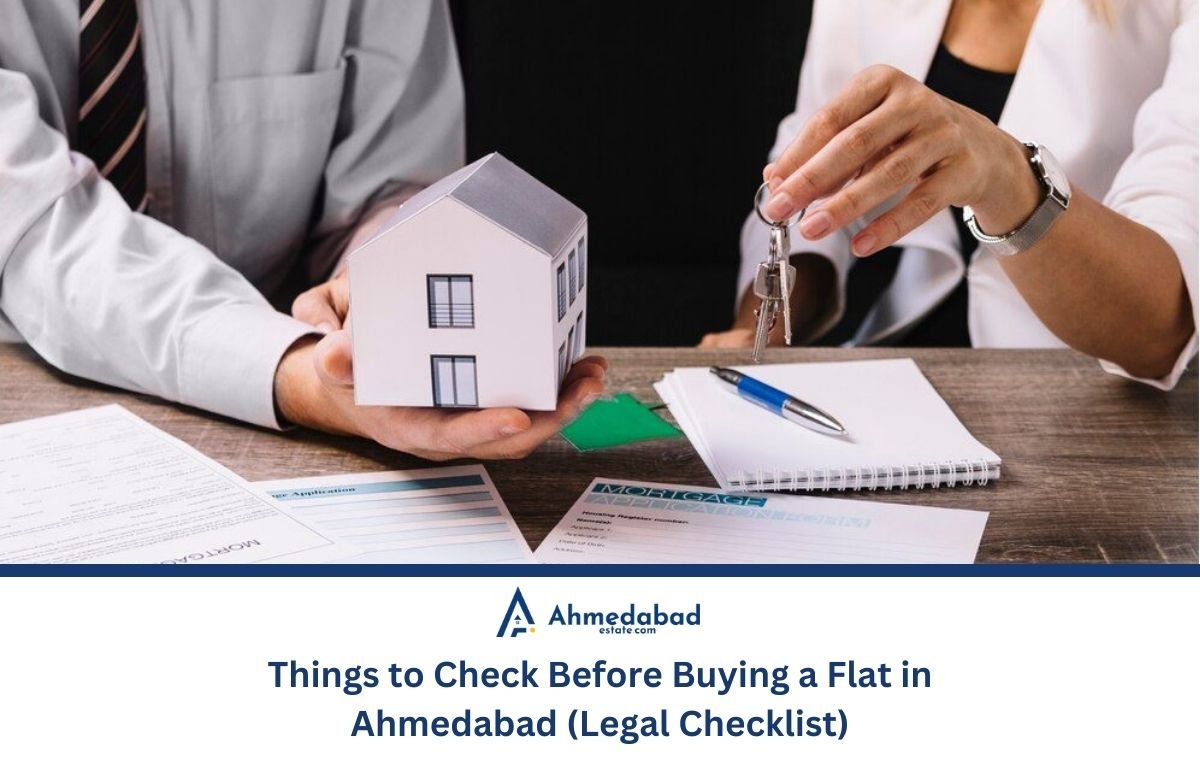

Buying a flat is one of the biggest financial decisions you will ever make. Whether you are a first-time homebuyer, an NRI investor, or someone upgrading to a new home, the excitement of finding the right property can sometimes overshadow an equally important step — legal verification.
Most buyers spend considerable time evaluating price, amenities, and location. But ignoring the legal documents behind a property can lead to disputes, financial losses, and even the loss of the property itself. This is why having a proper legal checklist before buying a flat in Ahmedabad is not just recommended — it is essential.
Ahmedabad's real estate market has grown rapidly, with new residential projects launching across areas like Bopal, South Bopal, Prahlad Nagar, and New Ranip. With so many options available, buyers must be more vigilant than ever. This guide provides a complete property verification checklist for Ahmedabad homebuyers to help you make a safe, informed, and legally secure investment.
The Title Deed is the most fundamental legal document for any property purchase. It establishes who legally owns the property and whether the seller has the right to sell it.
When verifying the title, buyers should:
• Review the chain of ownership for at least 20–30 years to ensure no gaps or disputes in prior transfers.
• Confirm the seller's name matches the title document.
• Ensure there are no claims, disputes, or legal challenges on the property.
A clear title means the property is free of legal encumbrances and the seller has full authority to transfer ownership to you.
An Encumbrance Certificate (EC) is an official record of all financial and legal transactions linked to a property. It confirms whether the property is mortgage-free and has no outstanding loans or legal liabilities.
For property legal verification in Gujarat, buyers should:
• Request the EC for a period of at least 13–30 years.
• Check for any registered mortgages, loans, or court attachments.
• Obtain the EC from the Sub-Registrar's Office or through online portals in Gujarat.
If the EC shows no liabilities, you can proceed with greater confidence. Any existing liens must be resolved before purchase.
The Real Estate Regulatory Authority (RERA) was established to bring accountability and transparency to India's real estate sector. Under RERA, all new residential projects above a certain size must be registered before sales can begin.
When checking RERA-approved projects in Ahmedabad:
• Visit the Gujarat RERA website (gujrera.gujarat.gov.in) to verify the project's registration number.
• Check the builder's registered details, project timeline, and completion status.
• RERA registration protects buyers from project delays and misrepresentation of amenities.
Never book a flat in an unregistered project. RERA compliance is a non-negotiable aspect of your Ahmedabad flat buying guide checklist.
Before buying a flat, confirm that the building's construction plans have been approved by the Ahmedabad Municipal Corporation (AMC) or the Ahmedabad Urban Development Authority (AUDA), whichever is applicable.
Approved building plans ensure:
• Construction follows zoning regulations and FSI (Floor Space Index) limits.
• The building's height, number of floors, and layout are legally permissible.
• There are no unauthorized constructions or deviations from the sanctioned plan.
Properties built without proper sanctions may face demolition notices or legal disputes — a risk no buyer should take.
In Gujarat, agricultural land cannot be used for residential construction unless it has been formally converted. This conversion is known as Non-Agricultural (NA) status.
As part of your property verification checklist in Ahmedabad, verify:
• Whether the land has been officially converted from agricultural to non-agricultural use.
• Whether the zoning category of the land permits residential construction.
• That the NA permission has been granted by the competent government authority.
Without valid NA permission, the construction may be declared illegal, putting your investment at serious risk.
Two certificates confirm that a building has been constructed legally and is safe to live in:
Issued by the municipal authority, the CC certifies that the building has been constructed according to the sanctioned plans and meets all technical standards.
The OC confirms that the building is safe for occupancy. Without an Occupancy Certificate:
• You may face difficulties obtaining electricity and water connections.
• Home loan disbursement by banks may be affected.
• The property may be considered illegal for residential use.
Always insist on the OC before taking possession of a flat, especially for ready-to-move properties.
Outstanding dues on a property do not disappear after a sale — they typically become the new owner's responsibility. This makes verification of all dues a critical part of the home buying checklist in Ahmedabad.
Before finalising the purchase, ensure:
• All property taxes are fully paid up to the current date.
• Electricity, water, and maintenance dues are cleared.
• No outstanding government dues or penalties are pending.
Ask the seller for original receipts and verify them independently with the AMC or utility provider before signing any agreement.
The Agreement for Sale is a legally binding document between the buyer and seller (or builder). It defines the exact terms and conditions of the property transaction.
A proper Sale Agreement should clearly state:
• Total property price and payment schedule.
• Possession date and penalties for delays.
• List of amenities and specifications promised by the builder.
• Refund and cancellation clauses.
• Terms related to registration and stamp duty.
Never rely on verbal promises. Everything must be documented in the agreement to protect your legal rights as a buyer.
A No Objection Certificate (NOC) from relevant authorities confirms that the project meets all regulatory requirements. For a new project, ask the builder to provide NOCs from:
• Municipal authorities (AMC/AUDA).
• Fire department for fire safety compliance.
• Environmental authorities, where applicable.
• Housing society (for resale properties — confirming no dues and transfer approval).
These clearances confirm that the project complies with all safety, environmental, and regulatory standards.
Even if all documents are in order, investing in a flat from an unreliable developer can lead to project delays, poor construction quality, or worse — an incomplete project.
Research the developer's track record by checking:
• Past projects delivered — were they completed on time?
• RERA compliance — any complaints or penalties registered.
• Customer reviews on property portals and social media.
• Financial stability and ongoing project commitments.
Buying from a reputed developer significantly reduces your exposure to project risk, especially for under-construction properties.
While this checklist covers the essential steps, every property transaction has its own unique legal nuances. Engaging a qualified real estate lawyer provides an added layer of protection.
A property lawyer can:
• Conduct a thorough title search and identify hidden legal issues.
• Verify the authenticity of all documents submitted by the seller or builder.
• Review and negotiate the Sale Agreement on your behalf.
• Ensure the registration and stamp duty process is completed correctly.
The cost of a legal consultation is a small price to pay when compared to the potential risks of a disputed or fraudulent property transaction.
Purchasing a flat in Ahmedabad is a milestone worth celebrating — but it must be backed by thorough legal due diligence. From verifying the Title Deed and Encumbrance Certificate to confirming RERA registration and the Occupancy Certificate, every step in this checklist is designed to protect your investment and your peace of mind.
Remember, documents to check before buying a flat in Ahmedabad are not just formalities. They are the foundation of a legally secure property transaction. Whether you are exploring residential projects in Ahmedabad for the first time or looking at resale flats, never skip the legal verification process.
Always perform proper due diligence, work with trusted professionals, and rely on verified platforms to find flats for sale in Ahmedabad. A little extra caution today can protect you from years of legal complications tomorrow.
Explore verified flats and RERA-approved projects on AhmedabadEstate.com — your trusted partner for safe property buying in Ahmedabad.